
The Role of Arrangers in Film and Television Jazz


Jazz has been a defining sound in film and television for nearly a century. From classic noir scores to contemporary dramas and documentaries, jazz brings emotional depth, atmosphere, and sophistication to visual storytelling. But behind every memorable jazz moment on screen is an arranger who understands how to translate the language of jazz into cinematic form.
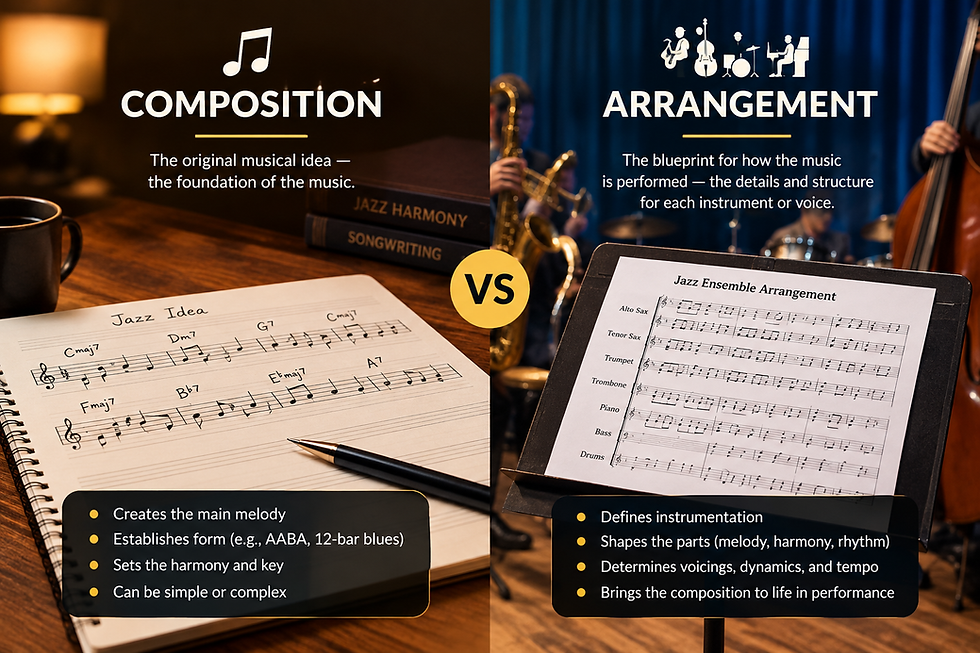
Arrangers play a central role in shaping how jazz functions in film and television. They take melodies, harmonies, and improvisational ideas and adapt them for specific scenes, ensembles, and emotional needs. At Bridgewater Publishing Company, we work closely with emerging composers who want to enter the world of media scoring, helping them understand how jazz arrangement intersects with storytelling, pacing, and visual context.
This expanded guide explores the essential role arrangers play in creating jazz-driven film and television soundtracks, the skills they need, and how jazz composition adapts when paired with visual media.
Why Jazz Works So Well in Film and Television
Jazz is uniquely suited to underscore visual narratives because of its expressive range and flexibility.
Key strengths of jazz in scoring include:
Emotional versatility
Strong rhythmic identity
Harmonic richness
Ability to convey character and atmosphere
Flexibility in ensemble size
Whether subtle and atmospheric or energetic and driving, jazz can shape the mood of a scene with remarkable precision. This makes arrangers especially valuable when producers or directors want to use jazz elements in their soundtracks.
What a Jazz Arranger Does in Film and Television Scoring
Arrangers translate musical ideas—whether original or adapted—into fully realized pieces that support the visual storyline. Their job is part creativity, part orchestration, and part interpretation.
1. Adapting Jazz Language for Visual Storytelling
Jazz arrangers must understand how harmony, rhythm, and melody influence:
Tension
Release
Motion
Mood
Character development
Film scoring requires balancing jazz authenticity with the emotional arc of the narrative.
2. Orchestrating for Specific Ensembles
Film and TV projects use a wide range of ensembles:
Solo piano or guitar
Small jazz combos
Modern big bands
Jazz orchestra with strings
Hybrid ensembles mixing acoustic and electronic textures
Arrangers tailor voicings, instrumentation, and articulation to fit the ensemble and the scene.
3. Writing Underscore vs. Feature Moments
In film and TV, jazz music serves two main functions:
Underscore: subtle, atmospheric writing that supports dialogue or action without distracting
Feature moments: bold musical statements used during montages, transitions, title sequences, or emotional peaks
Arrangers must know how to write for both situations and understand when to prioritize subtlety versus impact.
4. Managing Timing and Hit Points
Film and TV music must synchronize with:
Scene transitions
Character entrances
Visual cuts
Emotional beats
Key dialogue
Arrangers use timing charts, timecode, and click tracks to align jazz rhythms with visual cues.
5. Balancing Improvisation with Structure
Jazz improvisation is powerful, but in film scoring, structure and timing are essential. Arrangers often:
Limit solos
Write solo frameworks
Use guided improvisation
Create controlled variation
Improvisers must follow pre-determined lengths or thematic guidelines to ensure synchronization with the film.
The Skills a Jazz Arranger Needs for Film and Television
Scoring for visual media requires a unique combination of technical and musical abilities.
Essential skills include:
Strong orchestration knowledge
Deep understanding of jazz harmony and rhythm
Ability to write quickly and efficiently
Familiarity with notation software
Experience syncing music to picture
Knowledge of recording studio workflows
Adaptability across jazz subgenres
Ability to revise based on director feedback
Bridgewater Publishing supports emerging arrangers by helping them refine these skills through professional review, arrangement assistance, and catalog development.
How Jazz Arrangers Contribute to Film and TV Soundtracks
Jazz arrangers shape more than just the notes. They influence how audiences interpret characters, scenes, and emotional arcs.
1. Establishing Time Period and Setting
Jazz instantly evokes specific eras and atmospheres:
Swing era = 1930s–40s nostalgia
Hard bop = gritty, urban feel
Cool jazz = sophistication
Fusion = energetic, modern aesthetic
Arrangers choose instrumentation and style to align with the visual world.
2. Enhancing Character Identity
A character may have a theme or harmonic palette associated with:
Their personality
Their emotional journey
Their environment
Jazz’s expressive vocabulary helps arrangers create distinct musical fingerprints.
3. Supporting Pacing and Momentum
Jazz rhythms can:
Push scenes forward
Slow them down
Create suspense
Build anticipation
Arrangers must carefully shape rhythmic energy to match narrative pacing.
4. Reinforcing Mood and Emotion
Jazz harmony can shift emotion subtly or dramatically:
Minor blues evokes introspection
Quartal voicings create mystery
Bright dominant chords energize scenes
Modal harmony feels spacious and open
Arrangers choose harmonic textures based on emotional intent.
Examples of Jazz in Film and Television Scoring
Jazz has shaped many iconic soundtracks, demonstrating the genre’s power in storytelling. While this article does not reference specific modern works directly, jazz has played major roles in:
Classic noir films
Detective series
Coming-of-age dramas
Period-piece films
Animation
Documentaries
Modern urban or stylistic productions
These examples show how jazz’s adaptability keeps it relevant in every decade of film and TV history.
Challenges Jazz Arrangers Face in Film and TV
Working in media scoring presents artistic and logistical challenges.
Common challenges include:
Tight production deadlines
Complex director or producer feedback
Balancing authenticity with accessibility
Finding space for improvisation without disrupting timing
Adapting jazz language for non-jazz musicians in studio settings
Experienced arrangers learn how to navigate these issues while maintaining musical integrity.
FAQs
Is jazz still used often in film and television?
Yes. Jazz remains popular for period pieces, dramas, documentaries, and stylized productions due to its expressive nature.
Do jazz arrangers need to know film scoring techniques?
Yes. Understanding timing, syncing to picture, and cinematic pacing is essential.
Can jazz compositions be licensed for film and TV?
Yes. Original jazz pieces can be submitted for sync licensing or adapted specifically for media projects.
How important is improvisation in film jazz scores?
Improvisation is used selectively. Scenes requiring strict timing often have limited improvisational space.
Does Bridgewater Publishing help arrangers entering film and TV work?
Yes. We help composers prepare professional charts, organize catalogs, and develop material suitable for licensing.
Next Steps
Jazz arrangers play an essential role in film and television, transforming musical ideas into cinematic experiences that support storytelling and enhance emotional depth. For emerging composers and arrangers, mastering the intersection of jazz and visual media opens opportunities in an expanding industry. Bridgewater Publishing Company supports artists interested in developing their arranging skills for film and television, offering guidance in score preparation, catalog development, and professional presentation.


Comments